
Expensive vs. Affordable Skincare: What Actually Matters
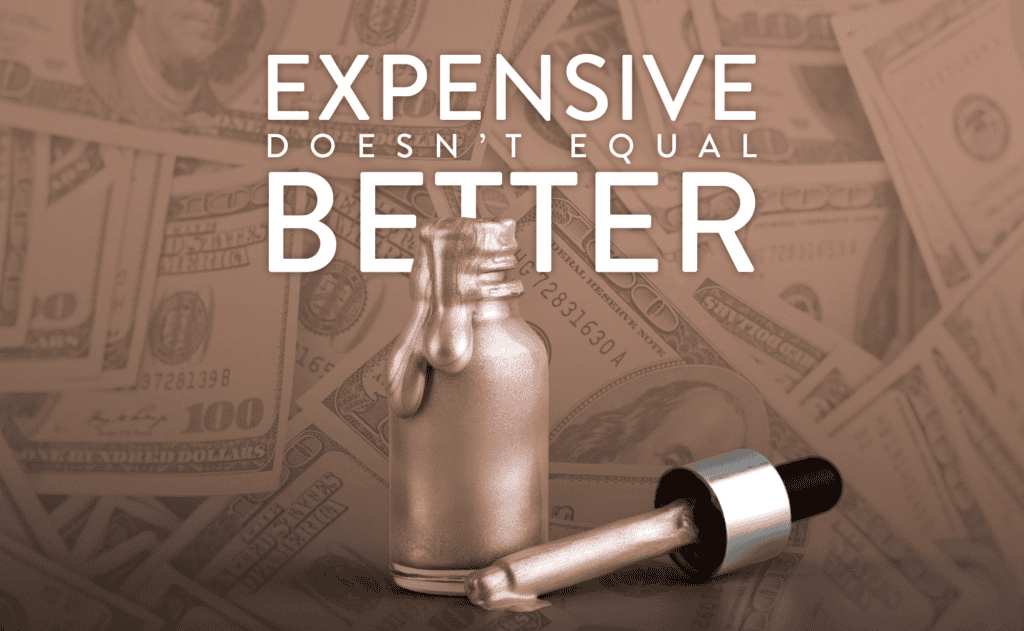
In today’s skincare market, price is often used as a signal of quality.
Premium packaging, luxury branding, and higher prices are designed to create confidence. For many consumers, that confidence becomes trust.
But here’s the reality:
Price alone does not determine product performance.
Instead, formulation, ingredient quality, and product intent are the primary determinants.
What You’re Really Paying For
When you buy a high-end skincare product, much of the cost often goes toward:
- Brand positioning
- Marketing campaigns
- Packaging and design
- Retail markups and distribution
These factors influence perception but do not necessarily improve a product’s performance on your skin.
In contrast, many smaller or formulation-focused brands allocate resources more directly toward:
- Ingredient quality
- Functional formulation
- Stability and delivery systems
As a result:
A lower price point does not necessarily indicate reduced effectiveness.
What Actually Matters in Skincare
To understand whether a product works, shift your focus to:
- Active ingredients (and their concentrations)
- Formulation balance (how ingredients work together)
- Stability (how the product holds up over time)
- Delivery systems (how well ingredients absorb and perform)
Because ultimately:
Your skin responds to chemistry—not branding.
Expensive vs. Affordable: A Practical Comparison
| Marketing Spend | High | Low |
| Packaging | Premium | Functional |
| Ingredients | Sometimes similar | Sometimes similar |
| Performance | Varies | Varies |
| Value | Often inflated | Often underestimated |
When Brand Trust Isn’t Enough
Recently, even widely trusted brands have come under scrutiny. For example, CeraVe, owned by L’Oréal, has faced multiple class action lawsuits alleging that certain acne products may contain benzene, a known carcinogen, due to the instability of benzoyl peroxide under certain conditions.
What’s important to know:
- Benzoyl peroxide is an FDA-approved acne treatment.
- Under specific conditions (heat, time, formulation instability), it can degrade and potentially form benzene.
- Regulatory agencies, including the U.S. Food and Drug Administration, monitor these risks and have stated that exposure levels in tested products are generally low.
The takeaway is not panic but awareness.
Even well-known, trusted brands are not immune to:
- formulation challenges
- storage issues
- ingredient instability
What Consumers Should Be Asking Instead
Instead of asking:
“Is this product expensive enough to work?”
Start asking:
- What are the active ingredients?
- Is this formulation designed for function or marketing?
- Does it support or disrupt my skin barrier?
What happens to this product over time and under real conditions?
Recommended Further Reading:
To gain a deeper understanding of product interactions with skin and environmental factors, consult the following resources:
- The Truth About Alcohol in Sanitizers (And Why I Walked Away)
- Over-Washing? What It’s Doing to Your Skin
- Skin Barrier: Science, Not Trends
- Why Air & Surface Purification Matters More Than You Think
These articles further elaborate on:
- formulation balance
- overuse vs. support
- environmental impact on skin health
Here’s the Bigger Picture
Skincare does not exist alone.
Your skin is influenced by:
- What you apply
- the environment you live in
- the products you use daily
- and how these systems interact over time
For this reason, all of our practices are grounded in a core belief:
Layered. Connected. Intertwined.
My Final Thought
A higher price tag can create confidence.
A recognizable logo can build trust.
But neither guarantees performance.
At DERMAGLOVE, our goal is for our logo to inspire trust; however, we prioritize scientific evidence to earn it.
Because nothing in your environment works alone.
It’s layered. Connected. Intertwined.
— Lisa
Sources & References:
- U.S. Food and Drug Administration – Benzene testing and regulatory guidance
- Valisure independent testing reports on benzoyl peroxide degradation (2024)
- Peer-reviewed dermatology literature on benzoyl peroxide stability and degradation pathways
- Benzoyl Peroxide Drug Products Create Benzene
- L’Oréal-owned CeraVe faces 6 class action lawsuits over claims products contain cancer-causing chemical

Lisa Levison
Lisa Levison brings more than thirty years of hands-on experience in hygiene, environmental exposure, and skin health and personal wellness, long before these topics became popular.
Her approach is grounded in real-world practice and measurable results. She challenges outdated methods and offers practical advice for today’s environments.
Learn more about Lisa and her work
✦ ✦ ✦
Become a DERMAGLOVER
Stay in the loop with Lisa Levison’s commentary; expert hygiene insights, clean beauty innovations, and exclusive offers delivered straight to you.
Exclusive Offers
Subscriber-only discounts & early sale access
Expert Knowlege
Tips & articles from 35+ years of hygiene expertise
First Access
Be the first to know about new product launches
No spam, ever. We respect your inbox as much as we respect your skin. Unsubscribe anytime.
Related Holistic Skincare Articles:
- Holistic Skin Care & Personal Wellness
- Why I Created BODYMODE: A Smarter System for Skin Health
- Your Daily Chemical Exposure Is Higher Than You Think
- Is Over-Washing Your Face Hurting Your Skin?
- Elevating Your Daily Skin Routine Without Overloading It
- Feeding Your Face: Why Nourishment Beats Overcorrection
- How Clay Masks Help Detox, Restore, and Revitalize Your Skin
- How to Protect Your Skin in Winter
- Body Serums: Where Holistic Skincare Meets Wellness And Environmental Care
- Revitalize Your Skin with BODY REVIVAL
- Vitamins That Support Resilient, Healthy Skin
- What’s Really in Your Skincare?
- Optimal Temperature for Sleep: Why Your Thermostat Matters
- Hands Never Lie: What Your Hands Reveal About Skin Health and Aging
- Environmental Stress & Your Skin Barrier: What You Need to Know
- Why Skin Infections Are Increasing (And How to Protect Yourself)
- After-Sun Skin Repair: How to Restore Your Skin Barrier After Sun Exposure
- FACE FOOD and the A.C.E. Approach to Skin Nutrition
- The Skin Barrier: Why Science, Not Trends, Protects your Skin
- Healthier Skin Starts with Smarter Cleansing
- Spring Skin Protection: How to Support Your Skin as Seasons Change
- Proactive Immune Support: How Your Skin and Environment Work Together
- How the LUXESKIN Collection Supports Skin Through Cold Weather
- Body Serums: Daily Support for Resilient Skin
