Sanitizing has become part of everyday life.
Surfaces are wiped more often.
Hands are cleaned more frequently.
Environments are constantly being reset.
At first glance, this seems like progress.
But there is another side to this shift — one that is rarely discussed.
Over-sanitization does not just impact what we see.
It impacts everything around it.
What Over-Sanitization Really Means for the Environment
Over-sanitization is not just about frequency.
It’s about intensity and accumulation.
When strong chemical products are used repeatedly across surfaces and environments, they don’t simply disappear.
They move.
Through:
- Air circulation
- Water systems
- Surface runoff
- Residual buildup over time
This creates a continuous cycle of environmental exposure.
The Hidden Impact on Air, Water, and Surfaces
Air Quality
Repeated use of harsh cleaning agents can:
- Release volatile compounds into indoor air
- Increase long-term inhalation exposure
- Contribute to a less stable indoor environment
Water Systems
What goes down the drain doesn’t end there.
Chemical residues can:
- Enter water systems
- Affect aquatic ecosystems
- Contribute to long-term environmental imbalance
Surface Integrity
Frequent exposure to strong chemicals can:
- Break down materials
- Reduce the lifespan of surfaces
- Create the need for more aggressive cleaning over time
This is where the cycle begins.
When Clean Becomes Disruptive
Clean should support an environment.
But when over-sanitization becomes the standard, it can:
- Disrupt natural balance
- Increase overall chemical load
- Create dependency on stronger solutions
- Reduce long-term system stability
This is not immediately visible.
But over time, the effects build.
The Connection Between Hygiene and Environmental Health
Hygiene does not stop at the surface.
It extends into the systems that support daily life.
When hygiene practices are not aligned with environmental health, they create tension between:
- Immediate results
- Long-term impact
This is where a shift is needed.
A Smarter Approach to Hygiene
For more than 35 years, my work has focused on understanding how environments perform over time.
One principle is clear:
You cannot create a healthy environment by repeatedly disrupting it.
A smarter approach to hygiene includes:
- Cleaning effectively without overuse
- Reducing unnecessary chemical exposure
- Supporting surfaces instead of degrading them
- Considering long-term environmental impact
This is where sustainability becomes practical.
Where PURAVIVE™ Supports Environmental Balance
balanced approach to hygiene requires solutions designed with environmental compatibility in mind.
The PURAVIVE™ Home Hygiene Collection:
- Cleans effectively without harsh chemical overload
- Supports surface integrity over time
- Reduces unnecessary environmental impact
- Aligns with a more sustainable approach to clean living
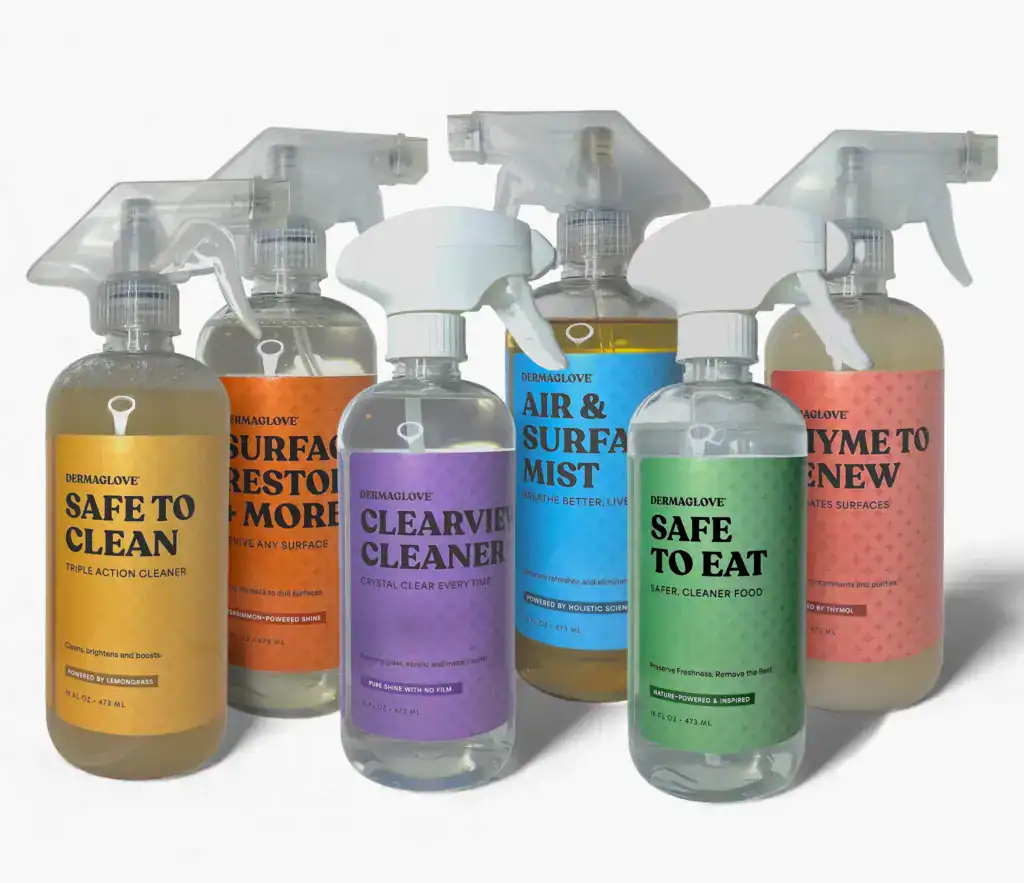
Puravive: Home Hygiene Box
A complete 6-piece, plant-based home hygiene system built on over 35 years of industrial hygiene science. The PURAVIVE Home + Facility Hygiene Box delivers professional-grade cleaning power with non-toxic, refillable formulas designed for everyday living.
This is not about removing effectiveness.
It’s about improving how it’s delivered.
Why DERMAGLOVE® Takes a System-Based Approach
DERMAGLOVE® understands that hygiene and environment connect.
This means:
- Designing solutions that support systems
- Reducing the need for constant overcorrection
- Aligning performance with long-term sustainability
- Creating balance between cleanliness and environmental health
👉 Explore the broader framework
Because true clean should support the system—not disrupt it.
The Missing Link: Why This Approach Works
At DERMAGLOVE, we recognize that problems are interconnected. Whether addressing skin issues, surface contamination, air quality, or environmental exposure, the same principle holds true: everything is related, and actions taken in one area can affect the entire system.
This understanding is the foundation of INVIS-O-BOND®, our core technology that supports and protects various environments without disruption. Our solutions go beyond merely addressing surface problems; they work to create long-lasting balance and improve outcomes over time.
👉 Learn more about INVIS-O-BOND®
My Final Thought
Over-sanitization may feel like protection.
But when it’s not balanced, it creates a different kind of risk.
The environmental cost is not always immediate.
But it is always cumulative.
A smarter approach to hygiene considers not just what we clean. It considers everything we affect.
Because the goal is not just to create clean environments.
It’s to create environments that can stay healthy over time.
Because nothing in your environment works alone.
It’s layered. Connected. Intertwined.
— Lisa
Suggested Reading:
- Are We Over-Sanitizing? The Truth About Alcohol, Bleach, and Modern Hygiene
- Sustainable Hygiene Habits for Modern Life
- Clean Living vs. Chemical Dependence: Rethinking Modern Hygiene Habits
- Designing Hygiene for Environmental Compatibility