
Why Mosquito-Borne Diseases are Rising
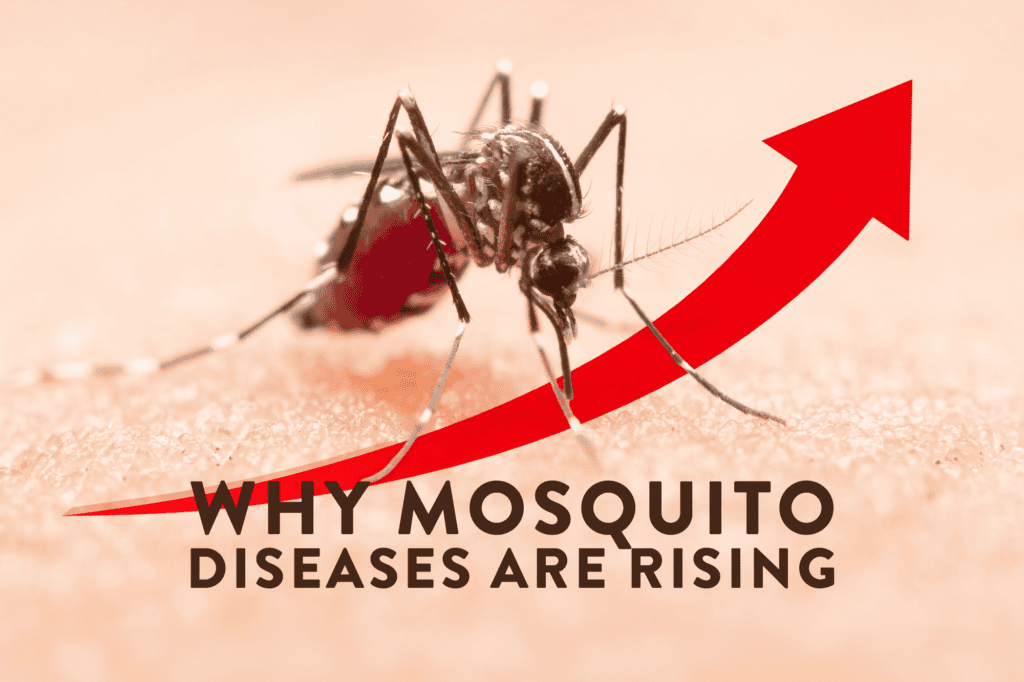
Mosquito activity is increasing.
But more importantly, so is the impact.
Across many regions, mosquito-borne diseases are becoming more common, more widespread, and less predictable than in the past.
This shift is not isolated.
It reflects bigger environmental changes that are changing how ecosystems work and how people are exposed.
What’s Driving the Increase?
The rise in mosquito-borne diseases is not caused by a single factor.
It is the result of multiple environmental shifts occurring simultaneously.
These include:
- Warmer temperatures that extend mosquito lifecycles
- Increased humidity and rainfall are creating more breeding areas
- Urban expansion into previously undeveloped environments
- Changes in wildlife patterns that affect disease transmission
Together, these factors create conditions where mosquitoes can:
- Survive longer
- Reproduce more frequently
- Spread into new geographic areas
This increases both exposure and risk.
From Seasonal Risk to Ongoing Exposure
Mosquitoes were once considered a seasonal nuisance.
Today, they are becoming a year-round concern in many regions.
You may notice:
- Earlier seasonal activity
- Extended presence into cooler months
- Increased populations in residential areas
- Greater frequency of bites and exposure
This shift means protection strategies must also evolve.
Reactive, seasonal approaches are no longer enough.
Why Traditional Thinking Falls Short
Most people approach mosquito protection in a limited way:
- Only during peak summer months
- Only in heavily wooded or rural areas
- Only when visible activity is high
But today’s conditions challenge that thinking.
Exposure can happen:
- In suburban and urban environments
- During unexpected times of the year
- In areas previously considered low-risk
This creates gaps in awareness and protection.
The Role of Environment in Disease Spread
Mosquito-borne diseases are not just about mosquitoes.
They are about ecosystems.
When environmental balance shifts, it affects:
- Breeding conditions
- Migration patterns
- Interaction between species
- Human exposure levels
This means that disease risk is directly connected to how environments are managed and understood.
A Smarter Approach to Protection
For more than 35 years, my work has focused on understanding how environments influence exposure.
One thing is clear:
You cannot manage risk effectively without understanding the system behind it.
A smarter approach includes:
- Staying aware of changing environmental conditions
- Recognizing that exposure is no longer strictly seasonal
- Using protection consistently when conditions call for it
- Supporting environments in ways that reduce risk without disruption
This is where awareness becomes a key part of protection.
How This Connects to Sustainable Living
As mosquito populations grow, there is often a tendency to respond with stronger, more aggressive chemical solutions.
But this can create new challenges:
- Environmental damage
- Impact on beneficial insects
- Increased chemical exposure over time
A more balanced approach focuses on:
- Targeted protection
- Responsible use of products
- Alignment with environmental health
This is where sustainable protection becomes essential.
How DERMAGLOVE® Approaches Environmental Exposure
DERMAGLOVE® is built on understanding how real-world environments behave.
This includes how exposure happens and how it can be managed in a responsible way.
Rather than focusing only on reaction, the approach is to:
- Support protection strategies that align with environmental conditions
- Reduce unnecessary chemical load
- Maintain balance between effectiveness and responsibility
👉 Learn more about our environmental approach
This is where protection becomes part of a larger system.
The Missing Link: Why This Approach Works
At DERMAGLOVE, we recognize that problems are interconnected. Whether addressing skin issues, surface contamination, air quality, or environmental exposure, the same principle holds true: everything is related, and actions taken in one area can affect the entire system.
This understanding is the foundation of INVIS-O-BOND®, our core technology that supports and protects various environments without disruption. Our solutions go beyond merely addressing surface problems; they work to create long-lasting balance and improve outcomes over time.
👉 Learn more about INVIS-O-BOND®
Why This Matters Now
The rise in mosquito-borne diseases is a signal.
It reflects deeper environmental changes that affect health, exposure, and daily life.
Ignoring these changes increases risk.
Understanding them allows for better decisions.
My Final Thought
Mosquito-borne diseases are rising as environments change.
And as those environments evolve, so must our approach to protection.
The goal is not to react to every change.
It is to understand the system and respond effectively and responsibly.
Because nothing in your environment works alone.
It’s layered. Connected. Intertwined.
— Lisa
Suggested Reading:
- Climate Change and Expanding Vector Seasons: What It Means for Health and Environment
- Sustainable Insect Protection for Modern Living: Why I Developed BUG OFF ME™
- Our Commitment to Environmental Stewardship: Why We’re Building The DEPOT
- Clean Living vs. Chemical Dependence: Rethinking Modern Hygiene Habits

Lisa Levison
Lisa Levison brings more than thirty years of hands-on experience in hygiene, environmental exposure, and skin health and personal wellness, long before these topics became popular.
Her approach is grounded in real-world practice and measurable results. She challenges outdated methods and offers practical advice for today’s environments.
Learn more about Lisa and her work
✦ ✦ ✦
Become a DERMAGLOVER
Stay in the loop with Lisa Levison’s commentary; expert hygiene insights, clean beauty innovations, and exclusive offers delivered straight to you.
Exclusive Offers
Subscriber-only discounts & early sale access
Expert Knowlege
Tips & articles from 35+ years of hygiene expertise
First Access
Be the first to know about new product launches
No spam, ever. We respect your inbox as much as we respect your skin. Unsubscribe anytime.
Related Environmental Stewardship articles:
- Sustainable Health and Environmental Health:
- What Is Lemon Eucalyptus Oil and Why Is It So Effective for Bug Protection?
- Sustainable Bug Protection
- How Water in Production Could Be the Hidden Link in Contamination Recalls
- Sustainable Beekeeping & Skin Science
- Every Day Is Earth Day
- A Smarter Way to Celebrate the 4th of July
- What’s All the Buzz About?
- Our Commitment to Environmental Stewardship
- Sustainable Insect Protection for Modern Living
- Celebrate Every Holiday Safely and Sustainably: A Smarter Way to Gather
- How to Safely Remove a Tick
- Responsible Ingredient Sourcing in Modern Skincare
- The Environmental Cost of Over-Sanitization
- West Nile Virus in Georgia: What You Need to Know
- Natural Bug Repellent That Actually Works (Without DEET)
- Safe Bug Protection for You and Your Pets
- How Bug Sprays Affect Bees, Pets, and the Environment
- It’s Not Just What You Apply…It’s What Stays: The Truth About Bug Repellents!
- Climate Change and Expanding Vector Seasons
- Chemical Runoff & Its Impact on Water Systems
- Designing Hygiene for Environmental Compatibility
